Introduction
In today’s fast-growing digital world, marketing has completely changed. Earlier, businesses depended mainly on newspapers, television, radio, hoardings, and word of mouth to promote their products and services. But now, with the rapid growth of the internet, smartphones, and social media, digital marketing has become the most powerful form of marketing.Understanding digital marketing basics every beginner should know is essential for building a strong online presence and reaching your target audience effectively.
What is Digital Marketing?
Digital marketing is the promotion of products, services, or brands using digital channels such as the internet, mobile phones, social media platforms, search engines, websites, and email.
In simple words, any marketing done using digital devices or online platforms is called digital marketing.
Examples of Digital Marketing
- Ads you see on Google search
- Sponsored posts on Instagram or Facebook
- Emails from shopping websites like Amazon or Flipkart
- youtube vedios
Types of Digital Marketing
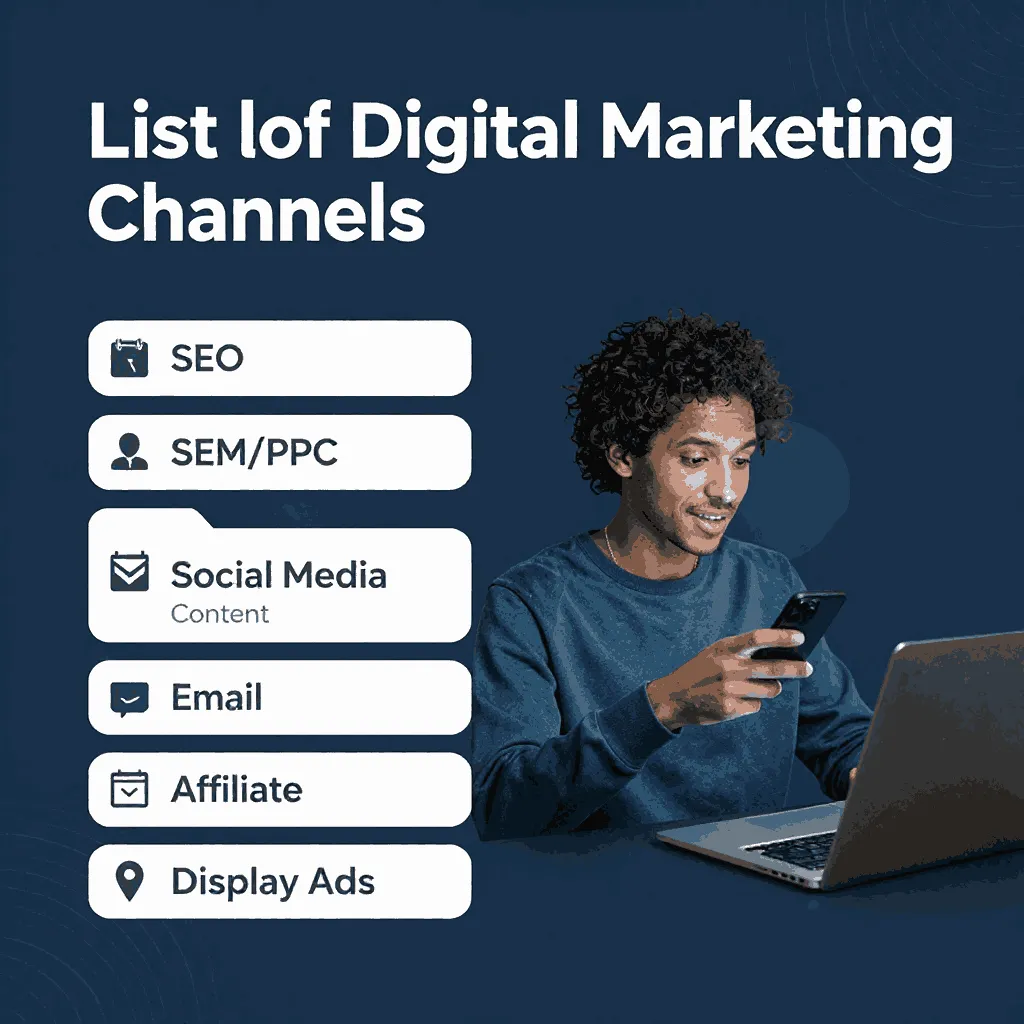
2.1 Search Engine Optimization (SEO)
Search Engine Optimization (SEO) is the process of improving a website so that it ranks higher on search engine results pages (SERPs), especially on Google.
When people search for something online, they usually click on results shown on the first page. SEO helps websites appear on that first page without paying for ads.
Examples:
If you search for “best tourist places in Kerala” and a blog appears on the first page, that website is using good SEO.
- Increases website traffic
- Builds trust and credibility
- Long-term marketing strategy
- Cost-effective
2.2 Search Engine Marketing (SEM)
Search Engine Marketing (SEM) refers to paid advertising on search engines.
The most common form of SEM is Pay Per Click (PPC) advertising, where advertisers pay only when someone clicks on their ad.
Examples:
When you search for “online courses” and see ads at the top of the page marked as “Sponsored,” that is SEM.
Benefits of SEM:
- Instant results
- High visibility
- Targeted audience
- Measurable performance
2.3 Social Media Marketing (SMM)
Social media marketing is the use of social media platforms like Instagram, Facebook, WhatsApp, YouTube, X (Twitter), and LinkedIn to promote a brand, product, or service. It helps businesses connect with people, build trust, and increase sales.
Instead of directly selling all the time, social media marketing focuses on building relationships. Brands share useful content, reply to comments, post videos, run ads, and engage with followers to stay in their minds.
Popular platforms include:
- YouTube
- Twitter(x)
2.4 Content Marketing
Content marketing is a way of promoting a business by sharing useful, helpful, and interesting content instead of directly selling. The main goal is to attract people, gain their trust, and keep them engaged.
This content can be blogs, videos, social media posts, reels, podcasts, emails, or infographics. When people find your content valuable, they naturally start trusting your brand and may become customers.
Types of content:
- Blogs
- Articles
- Vedios
- Podcasts
- Infographics
- E-books
Benefits:
- Builds authority
- Improves SEO
- Long-term results
- Increases customer loyalty
2.5 Email Marketing
Email marketing is a way of promoting a business by sending useful and relevant emails to people who have given permission to receive them. These emails help build relationships, share updates, and encourage customers to take action.
Instead of random messages, email marketing focuses on personal and meaningful communication with the audience.
Types of Email Marketing:
- Promotional emails
- Newsletters
- Transactional emails
- Follow-up emails
Example:
An online store sending discount offers through email.
Advantages:
- Low cost
- High return on investment (ROI)
- Personalised communication
- Easy to track results
2.6 Affiliate Market
Affiliate Marketing is a performance-based marketing strategy where individuals earn commission by promoting other companies’ products.
Affiliates earn money when someone buys a product through their referral link.
Examples:
- Bloggers recommending products with links
- YouTubers sharing affiliate links in descriptions
Benefits:
- No need to create own product
- Passive income opportunity
- Low investment
2.7 Influencer Marketing
Influencer marketing is a way of promoting a brand by collaborating with popular or trusted people on social media, called influencers. These influencers already have followers who trust their opinions.
Instead of traditional ads, brands use influencers to naturally recommend products or services to their audience.
Example:
Why Brands Use Influencer Marketing:
- Builds trust quickly
- Reaches specific audience
- High engagement rates
3. Digital Marketing Platforms
Digital marketing uses various platforms to reach audiences.
3.1 Google
- Google search
- Google ads
- Google Display Network
- YouTube
3.2 Social Media Platforms
- Snapchat
3.3 Websites and Blogs
- Company websites
- Personal blogs
- E-commerce sites
3.4 Email Platforms
- Gamil
- Mailchimp
- Hubspot
4.Benefits of Digital Marketing
Digital marketing offers many advantages over traditional marketing.
4.1 Cost-Effective
Small businesses can market with low budgets.
4.2 Global Reach
Businesses can reach customers worldwide.
4.3 Measurable Results
Tools like Google Analytics help track performance.
4.4 Targeted Marketing
Ads can be shown to specific age groups, locations, or interests.
4.5 24/7 Availability
Marketing continues even when businesses are closed.
5. Skills Required for Digital Marketing Beginners

To start a career in digital marketing, beginners should focus on developing these skills:
- Basic computer knowledge
- Communication skills
- Writing and content creation
- Creativity
- Analytical thinking
- Understanding customer behavior
- Willingness to learn new tools
Technical skills improve with practice and experience.
6.Career Opportunities in Digital Marketing
Digital marketing offers excellent career growth.
Popular Job Roles:
- Digital Marketing Executive
- SEO Specialist
- Social Media Manager
- Content Writer
- PPC Analyst
- Email Marketing Specialist
- Influencer Marketing Manager
Why Choose Digital Marketing as a Career?
- High demand
- Flexible work options
- Freelancing opportunities
- Continuous growth
- Creative field
Conclusion
Digital marketing is no longer the future, but the reality of conducting business in the current world. For newbies, learning digital marketing skills is the path to new and fascinating careers.
When one knows the fundamentals of SEO, social media marketing, content marketing, and email marketing, anyone can begin his or her journey of digital marketing with full enthusiasm. By experience and learning at a rapid pace, one can easily become a professional digital marketer.
Digital Marketing goes beyond simply selling products—it spans the art of reaching out to and understanding humans, and providing value.